ABC Transporters: Structure Function and Regulation
ABC Transporters: Structure, Function, and Regulation
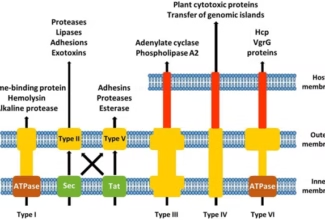
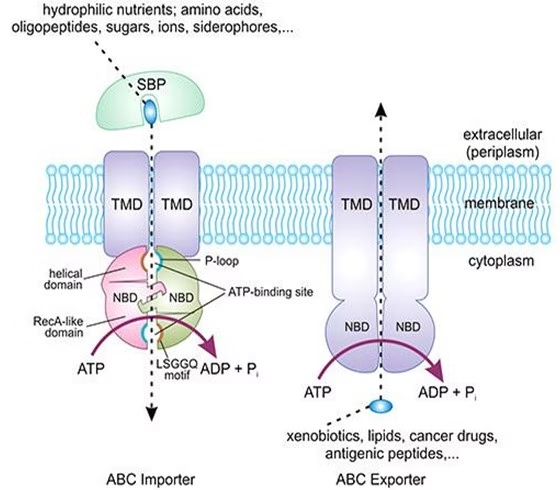
- ABC transporters are one of the largest and most widespread families of membrane transport proteins found in bacteria, archaea, and eukaryotes.
- The term ABC stands for ATP-Binding Cassette, referring to the conserved ATP-binding domain that powers transport.
- ABC transporters play an important role:
- uptake of nutrients
- export of toxic compounds, antibiotics, and signaling molecules.
Definition
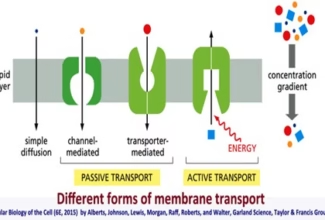
- ABC transporters are ATP-driven membrane transport proteins that move substrates across biological membranes using energy derived from ATP hydrolysis
Microbial Physiology and Metabolism